Vusi Thembekwayo Delivers Keynote at the Inaugural Africa Real Estate Festival in Accra, Ghana
POSTED: May 2026
Accra, Ghana | April 2026
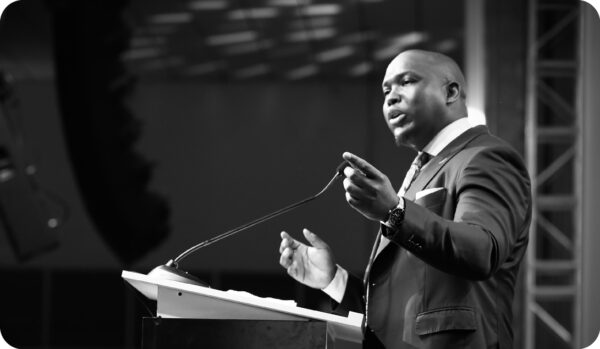
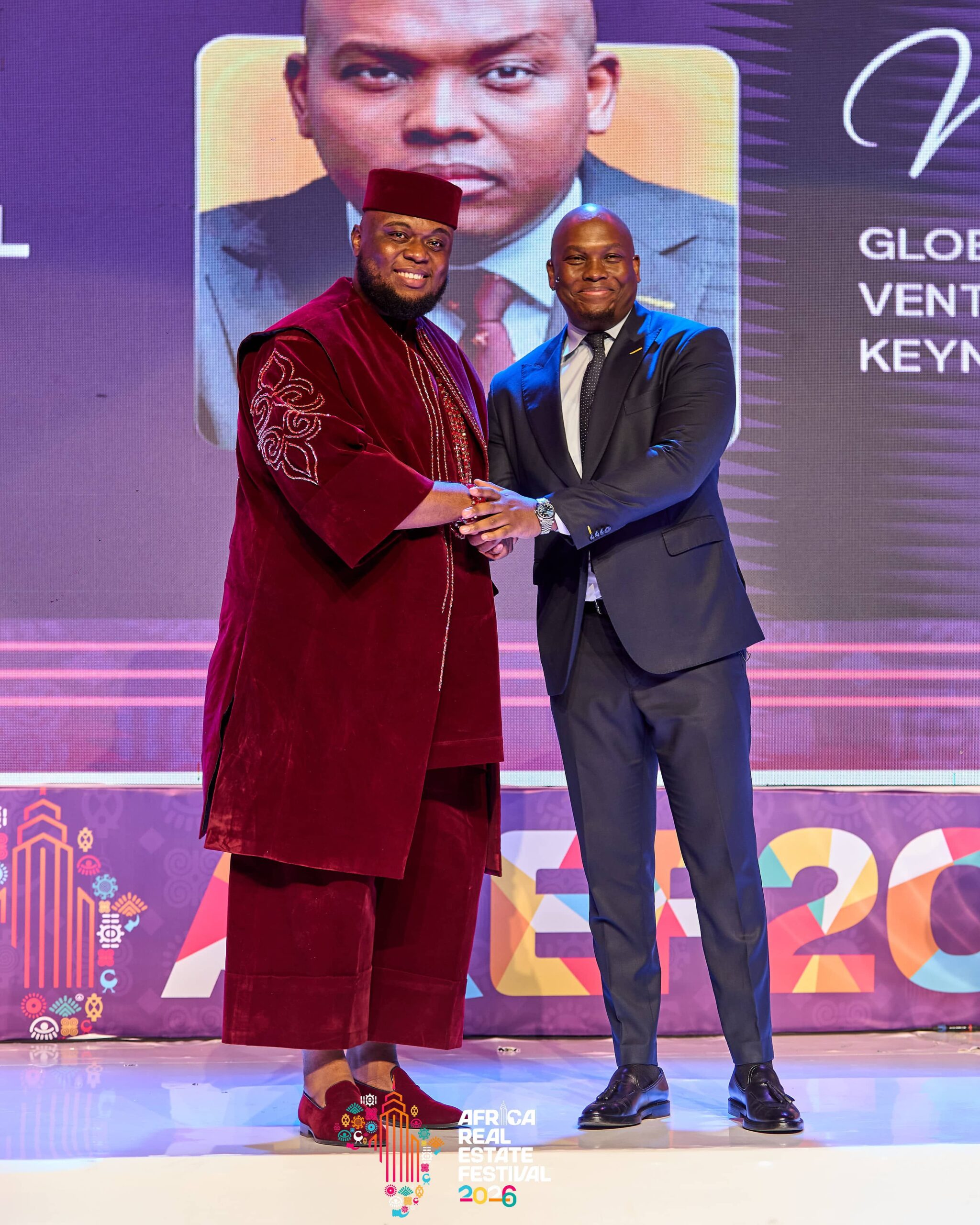
Vusi Thembekwayo opened his keynote at the maiden Africa Real Estate Festival (AREF) 2026 in Accra with a provocation that set the tone for the entire address: Africa is not the future. Africa is now.
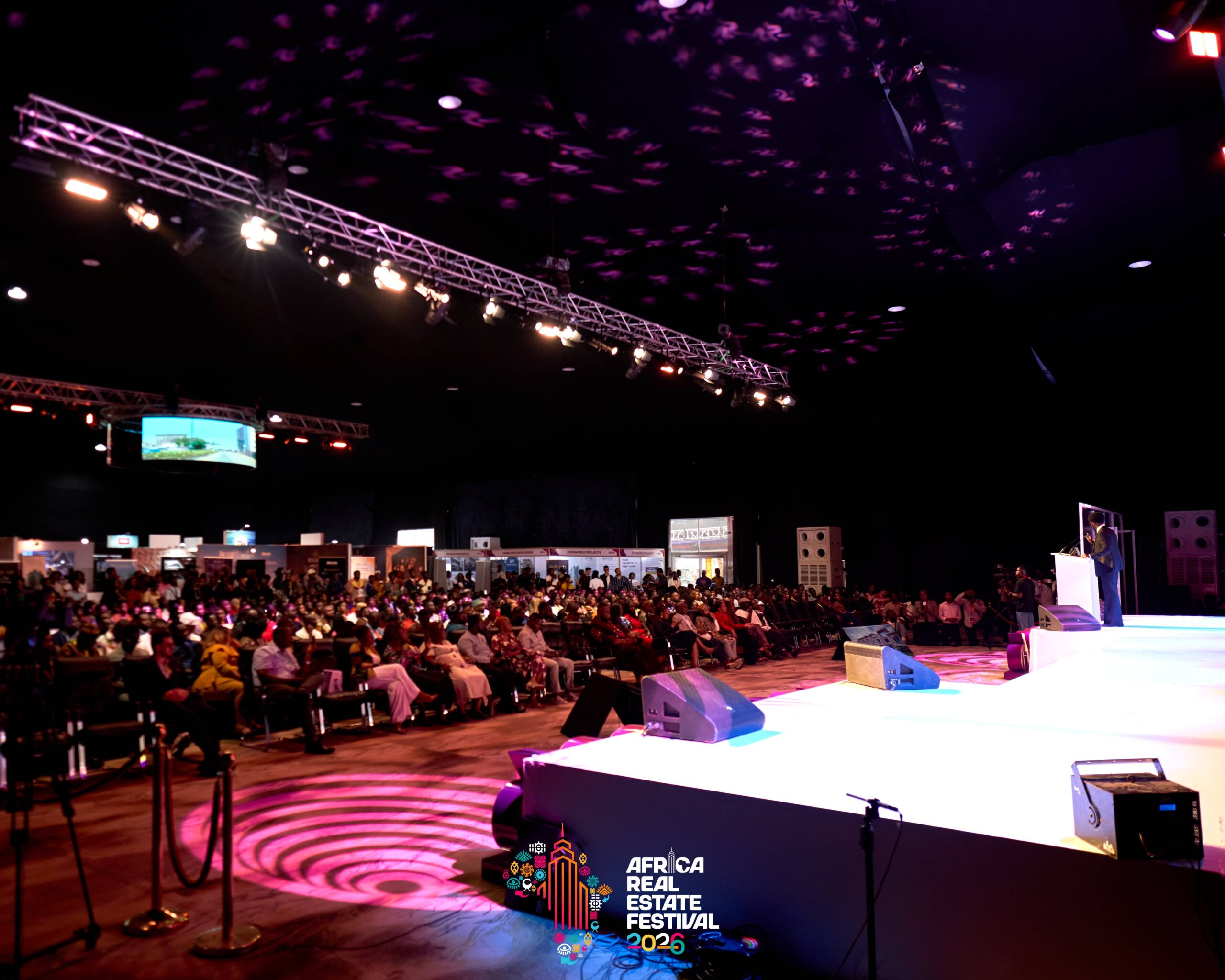
Speaking to more than 1,500 delegates, investors, policymakers, and real estate professionals from over 30 countries, Thembekwayo dismantled the tired narrative that positions the continent as a land of “potential” and replaced it with a data-backed case for why international capital is already here, already yielding returns, and why Africans themselves are often the last to act on what the rest of the world can already see.
The two-day festival, held 18-19 April at the Palms Convention Center, convened under the theme “Innovation Meets Identity: Designing Africa’s Next Living Experience.” It brought together developers, architects, investors, PropTech innovators, and state stakeholders to confront some of the continent’s most pressing questions on real estate development and support. Thembekwayo’s keynote was delivered, not with sentiment, but with structure.
A Trillion-Dollar Market Hiding in Plain Sight
Central to the address was Thembekwayo’s identification of Africa’s four anchor economies: South Africa, Nigeria, Ghana, and Kenya. Taken together, he argued, these markets represent a trillion-dollar opportunity that remains dramatically under-leveraged.
The implication for the AREF audience was pointed. The continent is wealthier and healthier than at any point in human history. There has never been a better moment to build, to invest, and to act. The question is whether Africa’s leaders and entrepreneurs will match the moment with the discipline it demands.
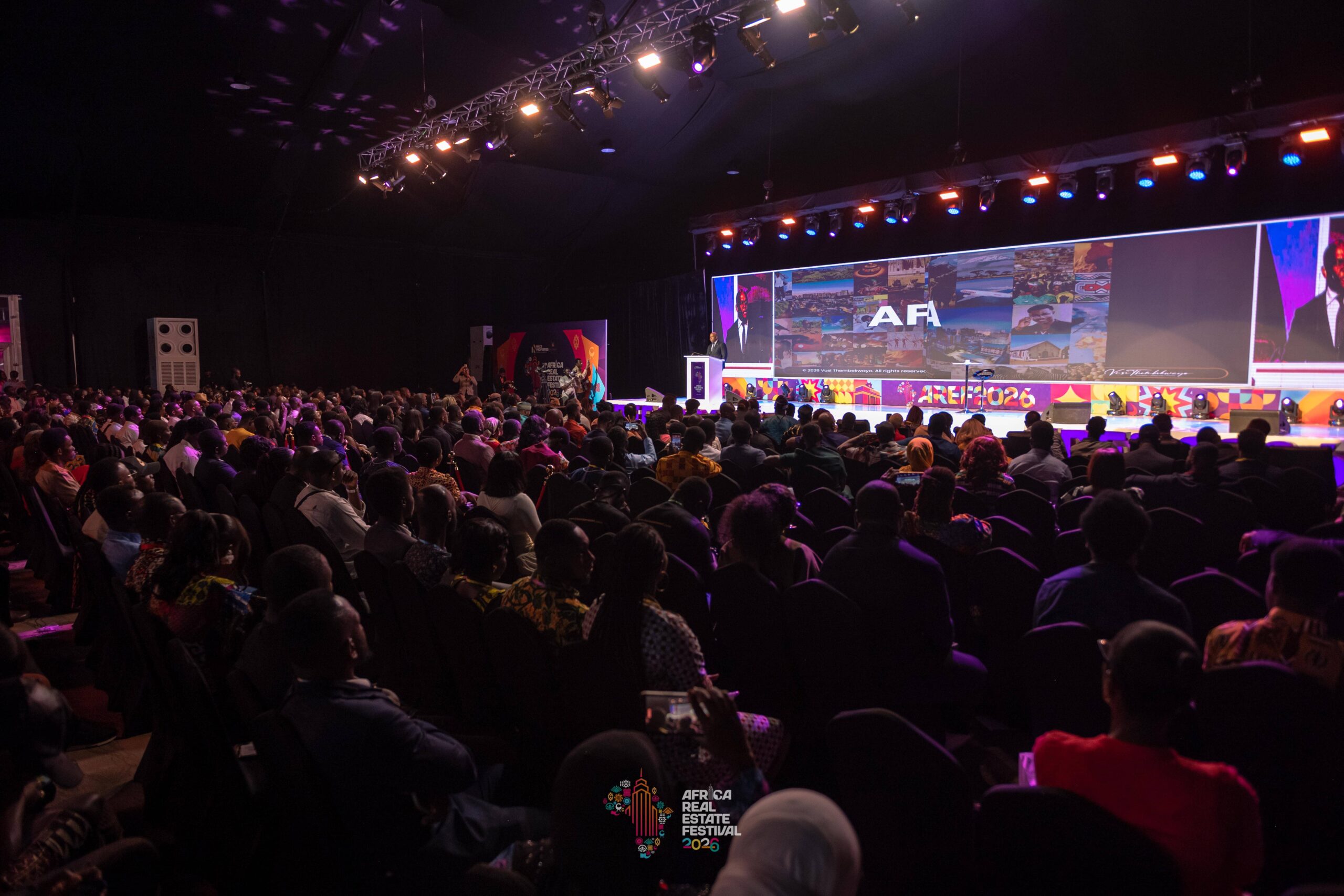
He also tracked the global shift in where value is created. In 2011, the world’s most valuable companies were concentrated in petrochemicals and mining. By 2021, they were almost entirely technology-driven. He pointed to companies like Anthropic, the artificial intelligence firm, generating revenue comparable to the GDP of entire African nations in a matter of years. For real estate professionals in the room, the message was clear: the sector’s future is inseparable from technology, and those who fail to integrate PropTech, digital infrastructure, and data-driven planning into their models will be building for a world that no longer exists.
“Sawubona”: The Call for Continental Unity
One of the keynote’s most resonant moments came when Thembekwayo invoked the Zulu greeting “Sawubona,” meaning “We see you.” He used it to challenge Africans to recognise each other’s shared humanity and collective economic power rather than remain fixated on internal differences. The rest of the world, he argued, already views Africa as a single unitary block. Africans are often the only ones drawing boundaries between themselves. For AREF, a festival explicitly designed as a pan-African platform with plans to expand across the continent, the framing was both philosophical and strategic.
Problems as Profit: The Energy Opportunity
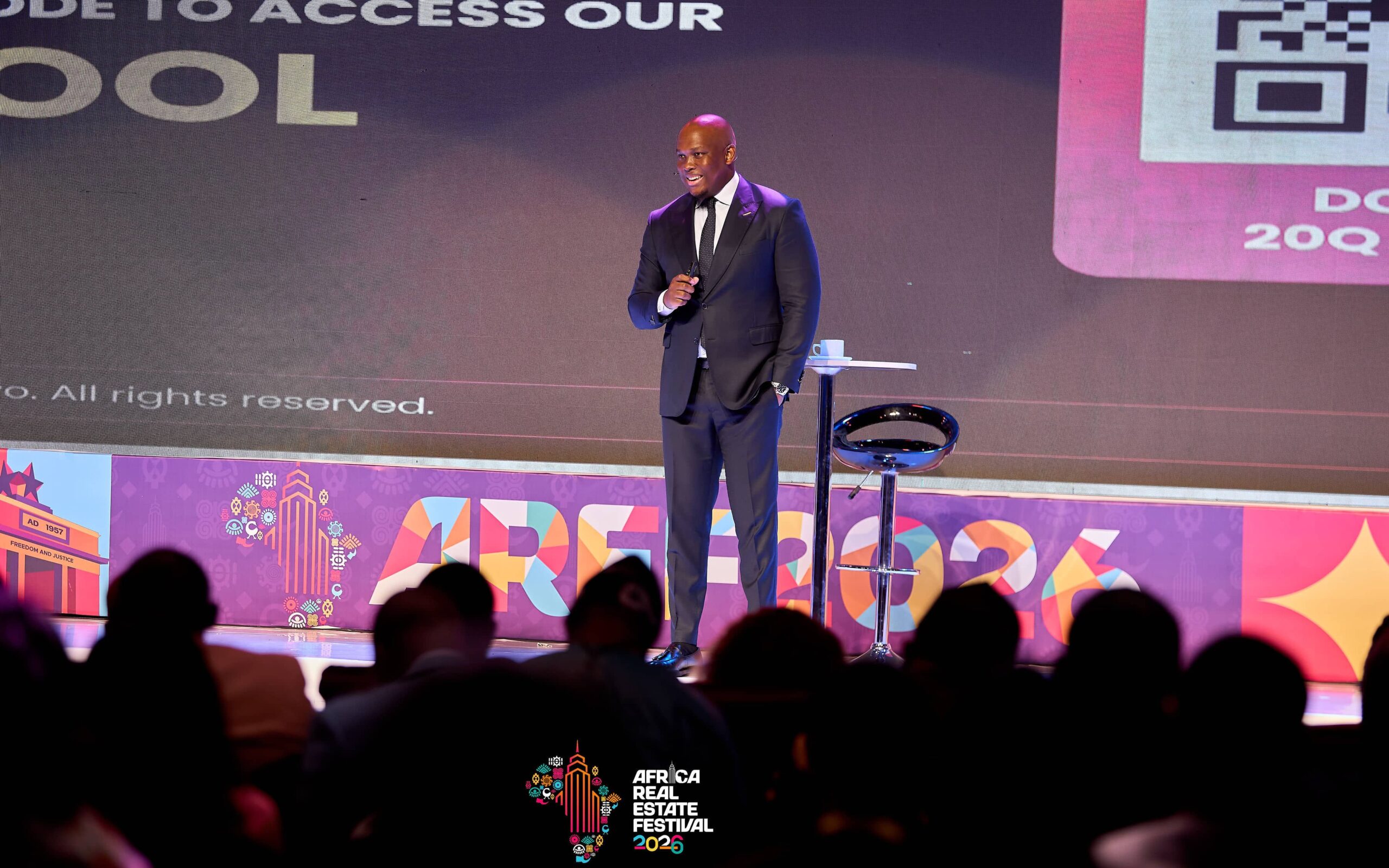
Thembekwayo identified Africa’s energy crisis as both the continent’s greatest constraint and its greatest commercial opportunity. In countries like Sierra Leone and Liberia, over 90 percent of the population lacks reliable access to electricity. For an industry that builds cities, that is not a footnote. It is a foundational obstacle.
But Thembekwayo framed it through the lens of capitalism’s core logic: every unsolved problem is an unbuilt business. Energy, infrastructure, water, sanitation. These are not just development challenges. They are revenue opportunities for entrepreneurs willing to do what governments alone cannot.
The Four Pillars of Winning
The keynote’s closing framework distilled Thembekwayo’s broader philosophy of competitive performance into four pillars that applied directly to the real estate professionals and investors in the room.
First, surround yourself with the right people. Thembekwayo was blunt: you become who you allow into your circle. Vetting who enters your inner circle, your boardroom, and your partnerships is not optional. It is survival.
Second, have a strategy and a playbook. Ambition without a plan is noise.
Third, identify the tools and resources required. In the context of African real estate, that means capital structures, PropTech, regulatory knowledge, and cross-border networks.
Fourth, cultivate the required mindset. Thembekwayo dismissed the concept of work-life balance for anyone pursuing transformational outcomes. His position was unequivocal: extraordinary results require extraordinary effort. It takes what it takes.
Why Accra. Why Now.
Ghana was not an arbitrary choice for AREF’s debut. The country has positioned itself as one of Africa’s most stable and investor-ready markets, with the government actively working to deepen diaspora participation in real estate and improve regulatory transparency through digital land governance. Ghana currently faces a housing deficit of more than 1.8 million units, and with its urban population now exceeding 58 percent, the pressure on housing and infrastructure in cities like Accra and Kumasi continues to build.
AREF 2026 was structured around four pillars: the Investment and Policy Conference, the Real Estate Exhibition and Diaspora Investment Pavilion, the Luxury Experience and Lifestyle Showcase, and the Cultural Festival and Innovation Matchmaking segment. High-level speakers included Ghana’s Minister for Works, Housing and Water Resources, Kenneth Gilbert Adjei, alongside representatives from the Real Estate Agency Council (REAC), Nilex Properties, and Goldkey Properties. International interest was underscored by Barbados’ participation, with High Commissioner Juliette Bynoe-Sutherland describing AREF as a bridge between diplomacy, investment, and sustainable development.
The festival also produced the AREF Report 2026, a data-driven publication on real estate trends and opportunities across the continent. Organisers have announced plans to expand AREF into a continent-wide circuit of regional editions.
A 2026 Built on Stages, Strategy, and Substance
Thembekwayo’s AREF keynote adds to an intensive 2026 speaking calendar. He recently delivered a major address at The Platform Nigeria 2026, where he called for intra-African economic collaboration and challenged narratives that divide the continent’s largest markets. His work through MyGrowthFund Venture Partners, the pan-African investment firm he founded with a mission to back 100 high-growth ventures and create 100,000 jobs, continues to reflect his conviction that Africa’s transformation will be driven by founders and leaders operating with rigour, accountability, and scale.
At AREF, that conviction met one of the continent’s most tangible challenges: housing, urban design, and the infrastructure that determines how hundreds of millions of people will live. For more than 1,500 delegates in Accra, the message was unmistakable.
Africa is not the next real estate market. It is the now market. And Vusi Thembekwayo came to make sure the room understood the difference.
For speaking engagements or media enquiries, visit www.vusithembekwayo.com